


Many compare this cycle to the dotcom bubble. I used to think it was much more similar to the 2008 cycle. Recent developments have made it clear as day that it is both, combined.
I am not a perma-bear. I keep an open mind and change my view based on facts. I was bullish for years until recently. Studying macro and putting the pieces together has made it impossible for me to be bullish.
What is happening right now is very obvious to me. People will say it was obvious in hindsight. This article is not to go in depth on each individual subject, but to show you the dots for you to connect.
Similarities to Dotcom:
People instantly think that anyone who says anything bearish on AI does not understand the technology. For context, I use AI heavily and it is very useful in my life and business. I understand the technology and study all the new developments and how it affects the landscape.
People are enamored by a novel technology and not aware of the rapidly changing landscape. They just see it can do incredible things and get caught up in the euphoria and think that nothing can go wrong and do not slow down and separate the technology from the financial reality.
Well, this dynamic is very similar to the dotcom bubble. The technology was real, however the future did not play out as the market priced.
The Race to AGI
To start this off, it’s important to understand the future OpenAI and Anthropic sold to the world.
Both Sam Altman (CEO of OpenAI) and Dario Amodei (CEO of Anthropic) have been saying for years that AI would replace all white collar labor.
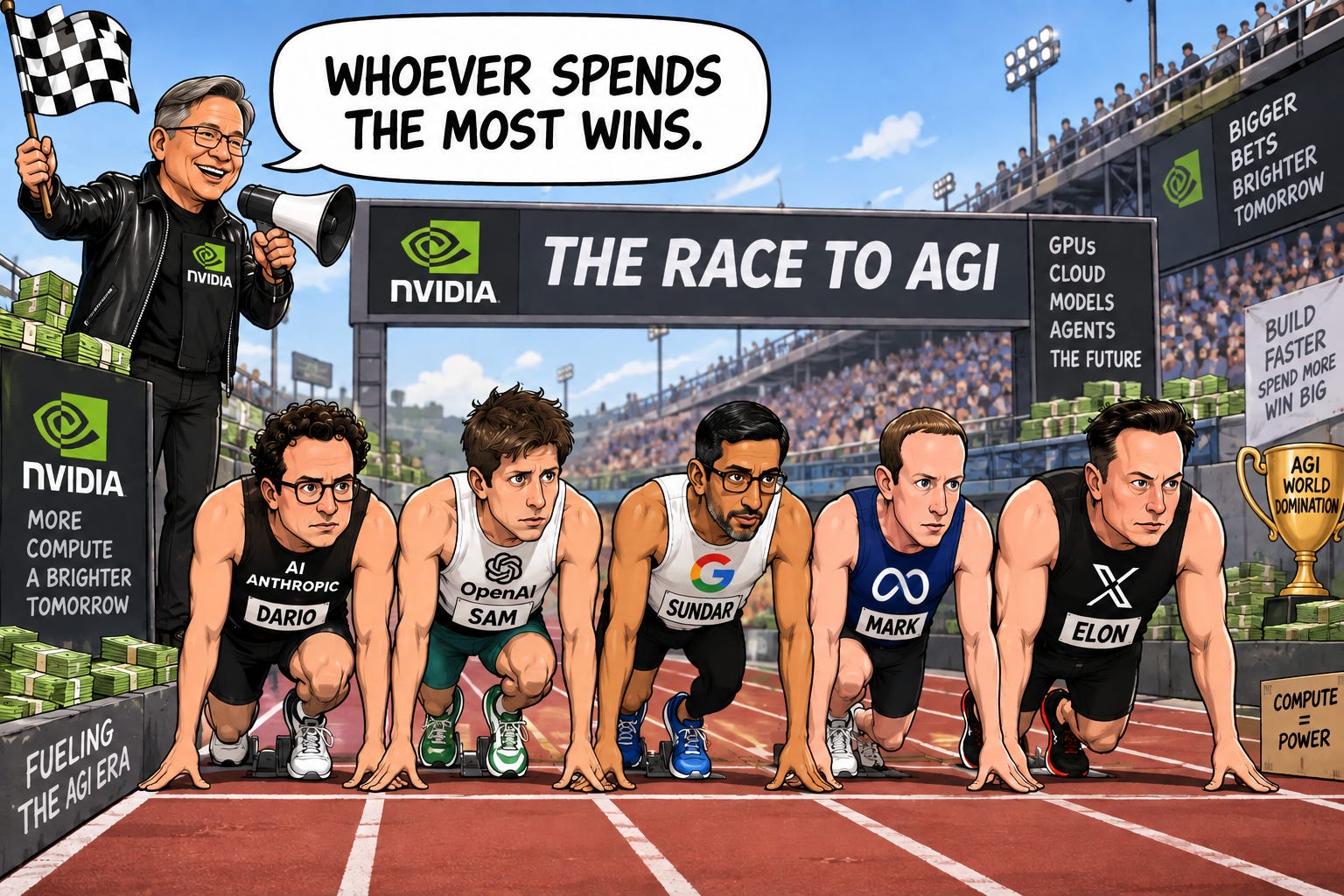
According to them, compute is the constraint, and whoever can secure the most compute and develop “AGI” would be the winner and be the one to replace all labor.
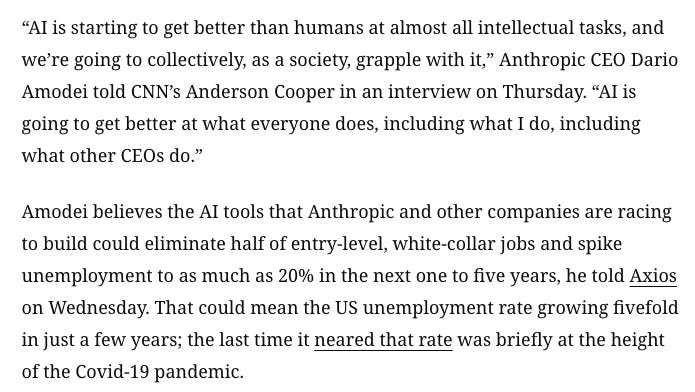
Let’s be clear about what AI really is. AI is a useful tool that humans work with. It is not some sort of autonomous brain that you can tell to go build a billion-dollar company. It’s a tool that makes capable humans infinitely more capable.
So the assumption that the labs made was that AI was going to replace all labor, and that whoever “gets there first” and “wins the race to AGI” wins the whole pie.
Intelligence is Becoming a Commodity
The AI labs thought there would be one winner in this race. What is playing out instead looks a lot like every other technology that got cheap and abundant.
A product becomes a commodity when three things are true: buyers can barely tell the suppliers apart, switching between them is cheap, and new supply keeps arriving. AI models check all three boxes.
New models release on a weekly basis at this point. Each one getting faster, cheaper, and less distinguishable from the other. While it was pretty much a two horse race, now there is competition from companies like Google, Meta, SpaceX, and open-weight models (more on this later).
Anthropic and OpenAI also assumed that people will pay up for “higher intelligence”. That reality was shattered when Anthropic released Claude Fable 5. The model was definitely a step above anything that existed at the time, but it was expensive.
What actually happened after the release was hardly anybody was using the model because it made doing tasks way too expensive.
I can say anecdotally I did not use Fable even though it was impressive, it was too expensive and other models got the job done. Many others I saw who could afford it were not using it as well. By one read of Ramp’s spending data, Fable 5 never got above about 11% of Anthropic dollar spend. Most usage stayed on cheaper models.
Open-Weight Models are Eating the Volume
Quietly, a much bigger issue for AI labs was brewing under the surface. Open-source models.
Open-weight models are models whose weights are public, so anyone can download and run the models, and fine-tune them instead of paying for usage from a closed API.
They have caught up fast, and in specific use cases fine-tuned models can match or beat frontier models at a fraction of the cost. They are essentially free. The only cost is the hardware, and power to run them.
OpenAI and Anthropic thought they had a moat around their business due to “intelligence”. That has quickly shifted to the picture looking like there is no real moat and LLMs are a commodity and a race to the bottom.
Below is an interesting data point from Vercel. It shows that open source has begun to dominate the platform and that trend began about 4 months ago. This is people using these models in the cloud through the API, so they use them purely for cost savings. They aren’t free, but they are still much cheaper than other models.
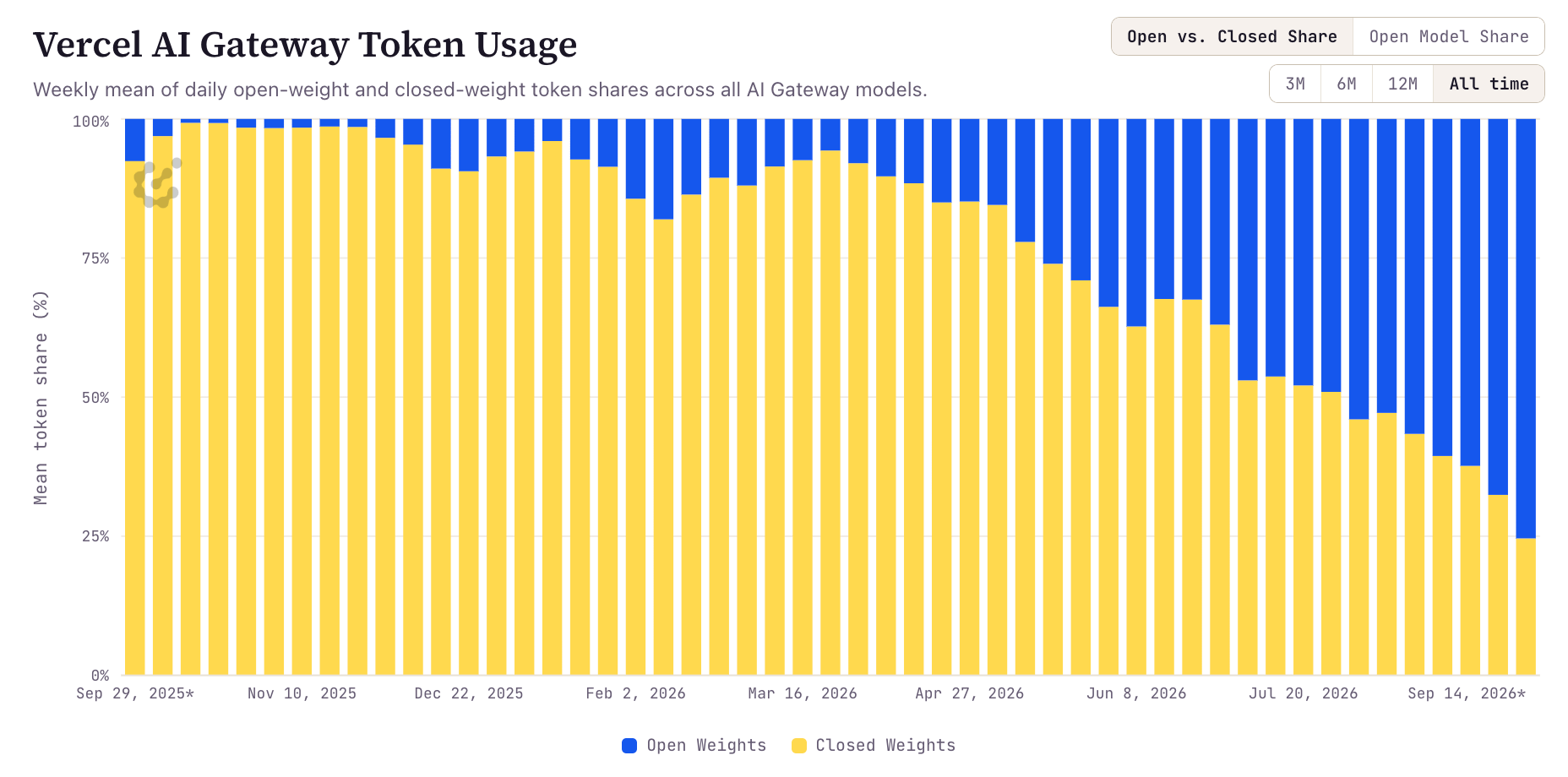
Cost is the first reason enterprises move to open models. Privacy is the second, and it may be the bigger one. To make AI truly useful, you have to give it access to everything: your code, your documents, your customers. Handing that to a company whose stated goal is to automate white collar work is a hard sell for any business whose edge is its intellectual property. Running an open model on your own infrastructure removes that problem.
Enterprises are already realizing that open source AI is good enough or better for most work and that privacy is necessary.
Many large companies already run open models for some or most of their workloads including names like Spotify, Uber, Zoom, DoorDash, Shopify, Goldman Sachs, AT&T, Microsoft, NVIDIA, Dell Technologies, IBM, ServiceNow, Snowflake, Accenture, Stellantis, Perplexity, Cloudflare, and Zeta Global.
This is not the future OpenAI and Anthropic envisioned and spent on, which is why they are panicking.
Open-source models are catching up in capability and becoming smaller and able to run on cheaper hardware. If this trend continues, one can imagine that there will be Fable 5 level models that can run on ordinary laptops, allowing anyone to use powerful AI for free.
Consumer AI
These AI companies live in their tech bubble and seem to think that everyone needs AI integrated into every facet of their life. What is actually playing out is that most people’s lives actually haven’t been changed. Most people use AI as a replacement for search and a shockingly low amount of people pay for it.


On top of this, they are facing competition in the consumer AI space, with companies like Meta, Google, and Apple starting to compete in consumer.
It’s my view that because AI is so invasive to be useful (requiring sharing email, messages, credit cards, etc) privacy is necessary for adoption. Apple is the only company focused on privacy and just entered the game by having on device AI. The device has the data that makes using consumer AI useful. I think once Apple improves capabilities on the device, basic consumer AI will run directly on device.
The Math Does Not Add Up
This is where the story falls apart. Both Anthropic and OpenAI have signed compute commitments far larger than anything their revenue can pay for. The only way to pay for it is to keep raising money on the promise that the math works eventually.
Per an internal OpenAI presentation reported by the Financial Times:
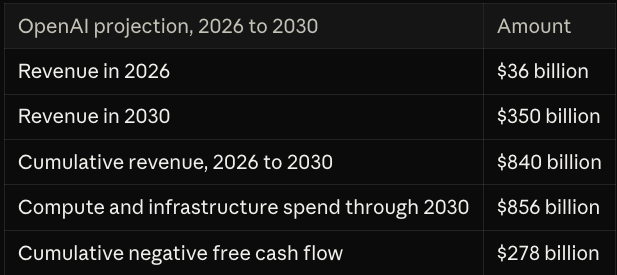
OpenAI is at $36 billion a year currently. These projections are their best case scenario. That $350 billion does not properly weigh the threat of competition from other AI labs and open source models. Their BEST case scenario is that they are negative $278 billion dollar cash flow. No profitability in sight.
So they have to be able to continuously raise capital on the promise that it will pay off, but slowly the facade is wearing off and the ability for them to raise infinite capital is getting much more difficult.
Anthropic is in a similar situation, with larger numbers. Hear it from the man himself. He laid out exactly what’s going on, he just used larger numbers:
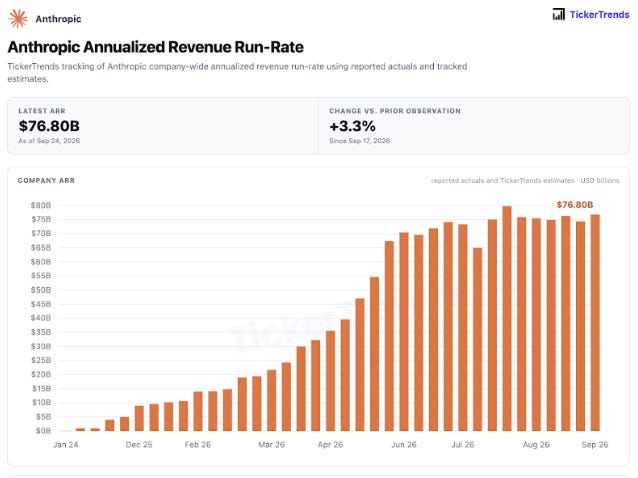
According to TickerTrends estimates, it looks like competition is affecting Anthropic’s exponential growth and it seems to be stalling.
The Compute Squeeze
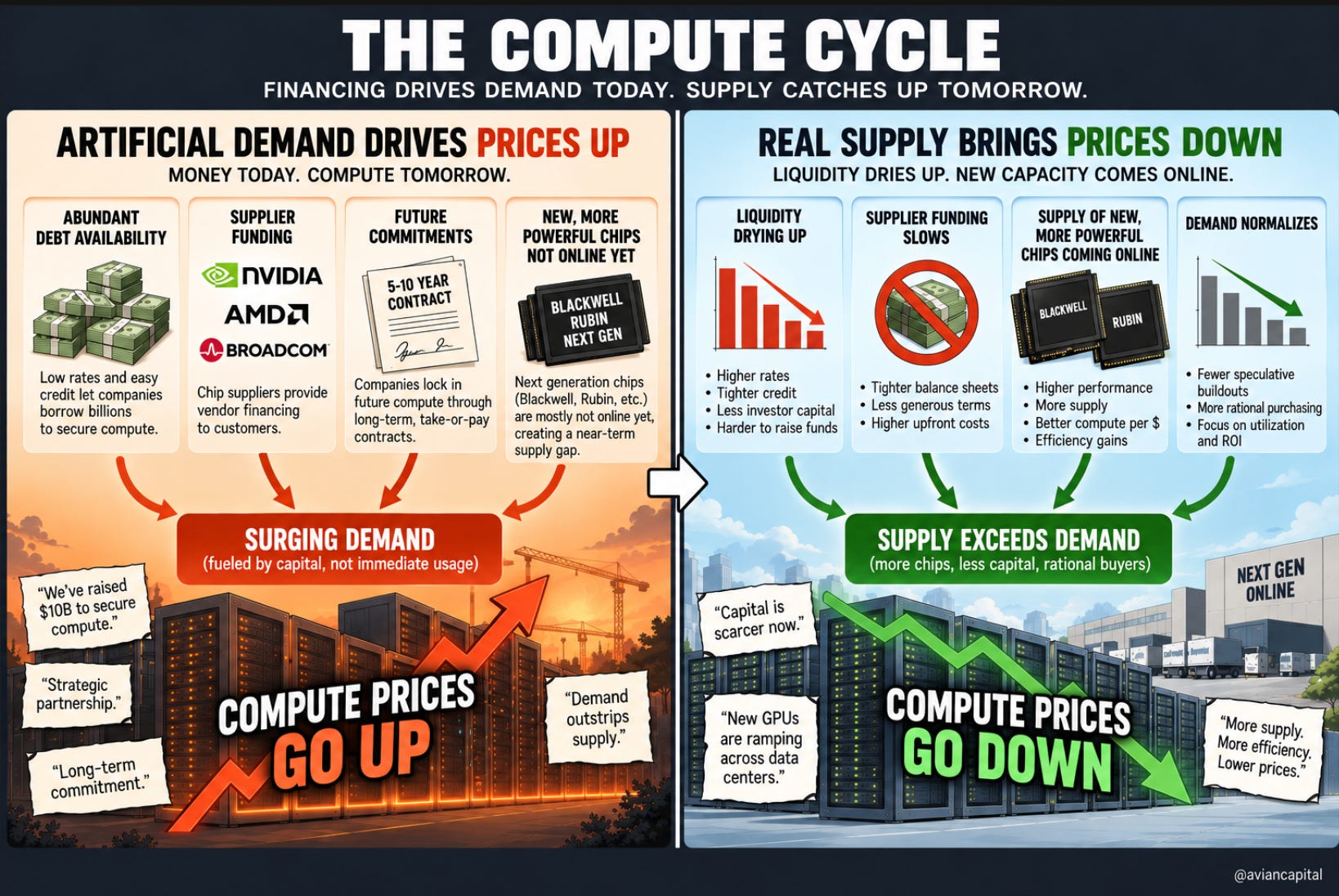
What many miss about GPU and memory prices is the artificial price squeeze that occurred.
Supplier funding, credit, newer chips not coming online, and the allowance of companies to commit spending equal to multiples more dollars than their own revenue (due to the assumption they will continue to grow exponentially forever) pulled future compute demand into the present.
People mistake this artificial demand for actual demand. Yes, there is a ton of demand. But that demand would not have caused the same price increases without these dynamics being at play.
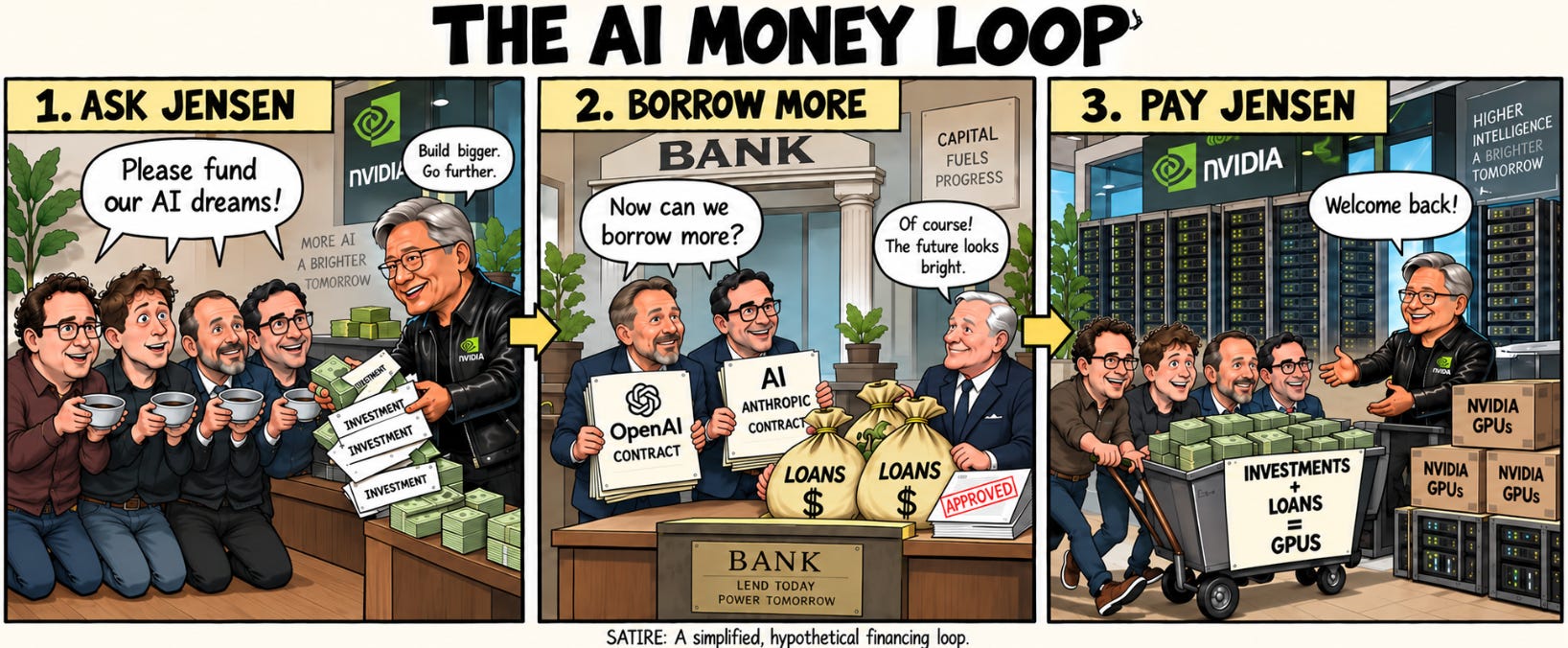
Nvidia invested in infrastructure buyers, AI labs, and other AI startups. Around 102 companies were given capital to purchase their own products. AI labs signed enormous long-term compute commitments, and neoclouds borrowed against customer contracts to finance expansion. That could allow companies to reserve and bid for capacity faster than new infrastructure became available, pushing prices above what current customer spending alone would support. “Artificial” does not mean the demand was fake. It means scarcity was amplified by financing and promises of future growth. This is how Nvidia is able to achieve those juicy 75% gross margins.
We saw this in the dotcom bubble. Equipment makers lent money to cash-strapped carriers so they could buy equipment. Lucent committed $8.1 billion in vendor financing, Nortel $3.1 billion, and Cisco $2.4 billion. McKinsey later put combined exposure across nine suppliers at about $25.6 billion. It looked brilliant while it lasted. Then the customers could not generate enough revenue to repay, dozens of carriers went bankrupt between 2000 and 2003, and the vendors wrote off billions. Nortel went from one of the most valuable companies in the world to bankruptcy.
The other thing adding to the compute squeeze is the fact that the infrastructure can’t be built fast enough to get Nvidia’s much more capable chips online. Getting these ambitious datacenter projects online takes time. It’s also facing political resistance. This ends up with a bunch of chips sitting, not being utilized and further pushing existing compute prices higher.
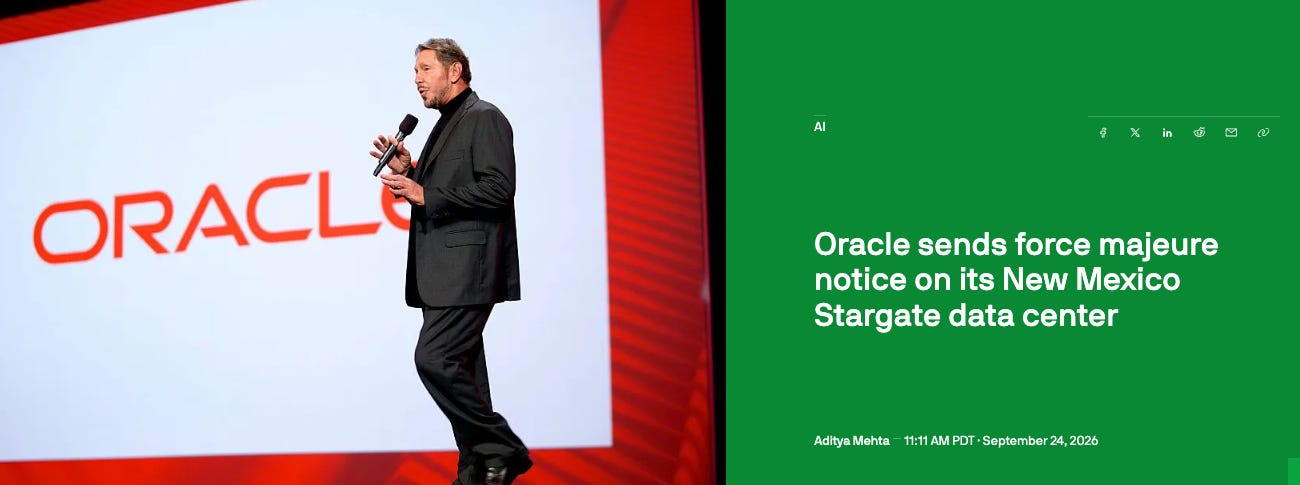
We saw the first sign this is becoming a problem with Oracle sending a force majeure to try to delay making payments on their datacenter that will not be completed on time.
Compute Futures
Now on October 5th, CME Group is launching futures for compute. The same thing happened in the dotcom bubble for fiber futures.


I want to focus on the second point from this post. The fiber supply glut was due to an engineering breakthrough which allowed engineers to squeeze massive amounts of data out of existing supply.
At any moment, there can be an engineering breakthrough that can do the same with compute. As I am writing this, we saw a completely new type of model release out of nowhere. It is orders of magnitude cheaper, faster, and more accurate with almost no hallucinations for specific tasks. Not saying it is the exact same thing, however it proves the point that a similar situation can happen out of nowhere.
AI Security and IPO Delays
The labs convinced the world they would build superintelligence, control it, replace labor, and make trillions. Now they face real competition and are loudly calling for safety and regulation. Meanwhile, both keep shipping new models.
Both have also pushed back their IPOs. An IPO is the payday for insiders and VCs, but it means opening the books to the public. The timing is convenient: open models are gaining ground and the early exponential phase is fading.
-There was talk about OpenAI going public in June. They pushed it back and were set to IPO later in the year. Then the safety talk came and now they are delaying to 2027. They already did another private round at a 1.2T valuation.
-Anthropic was set to IPO in September. They then delayed till October. Now it’s delayed to November.
After delaying their IPO, and Dario doing media rounds to warn about AI safety and suggest that AI can be used to create a biological weapon, Anthropic set up a wet lab.

They missed their window to IPO. The mania has left the market and people are starting to realize what is going on. The numbers can’t stand on their own in public scrutiny.
Their entire business model relies on raising more capital. If they missed their window to IPO, they are going to have to raise at higher and higher valuations in the private markets that already don’t make sense, to be able to pay for the spending commitments they have or it all falls apart.
Concentration
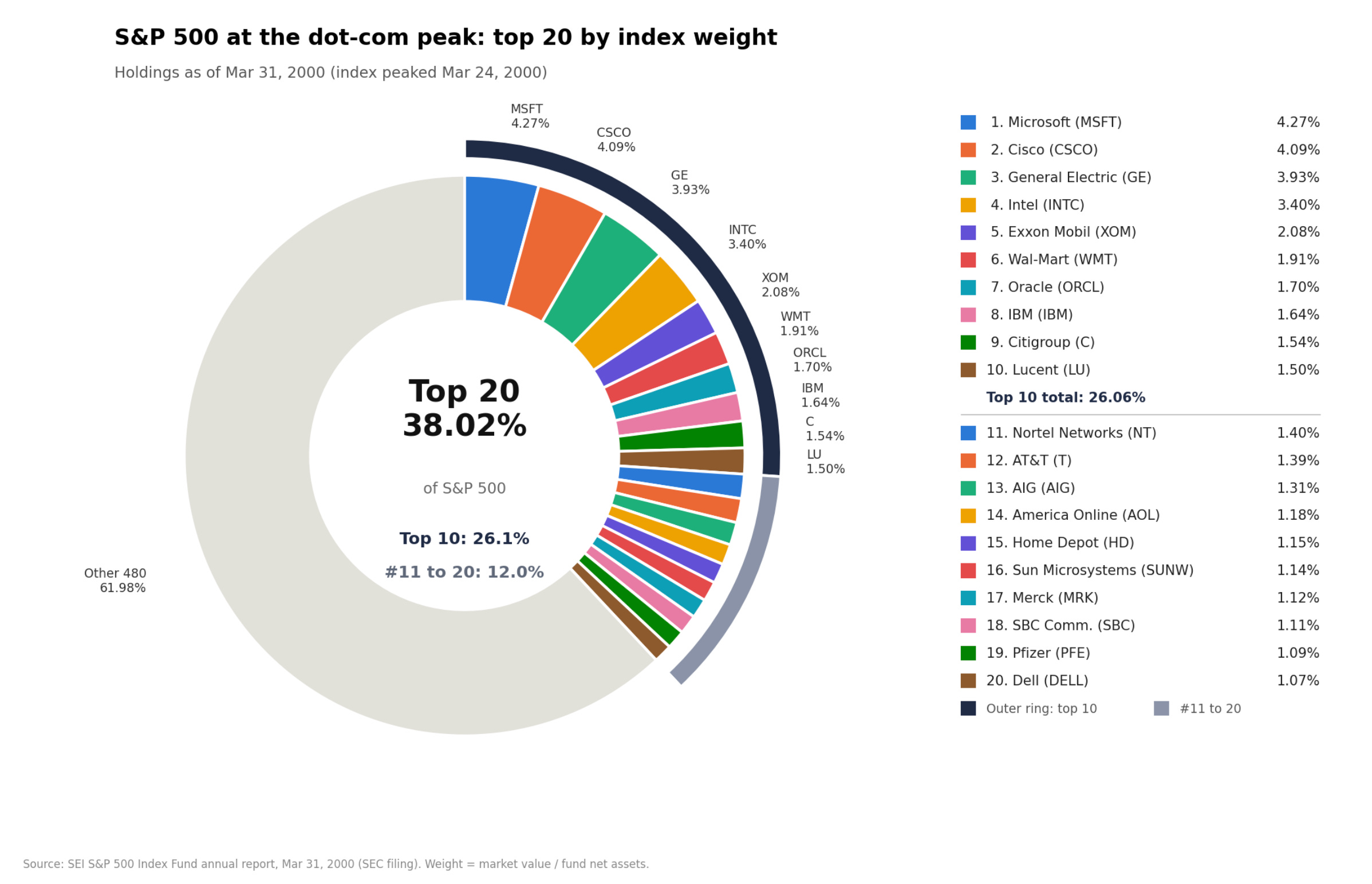
A large part of the dotcom bubble was how heavily concentrated the S&P500 was which drove the index higher and made the crash more severe.
This is what it looked like in the dotcom bubble:
Here is what it looks like now:
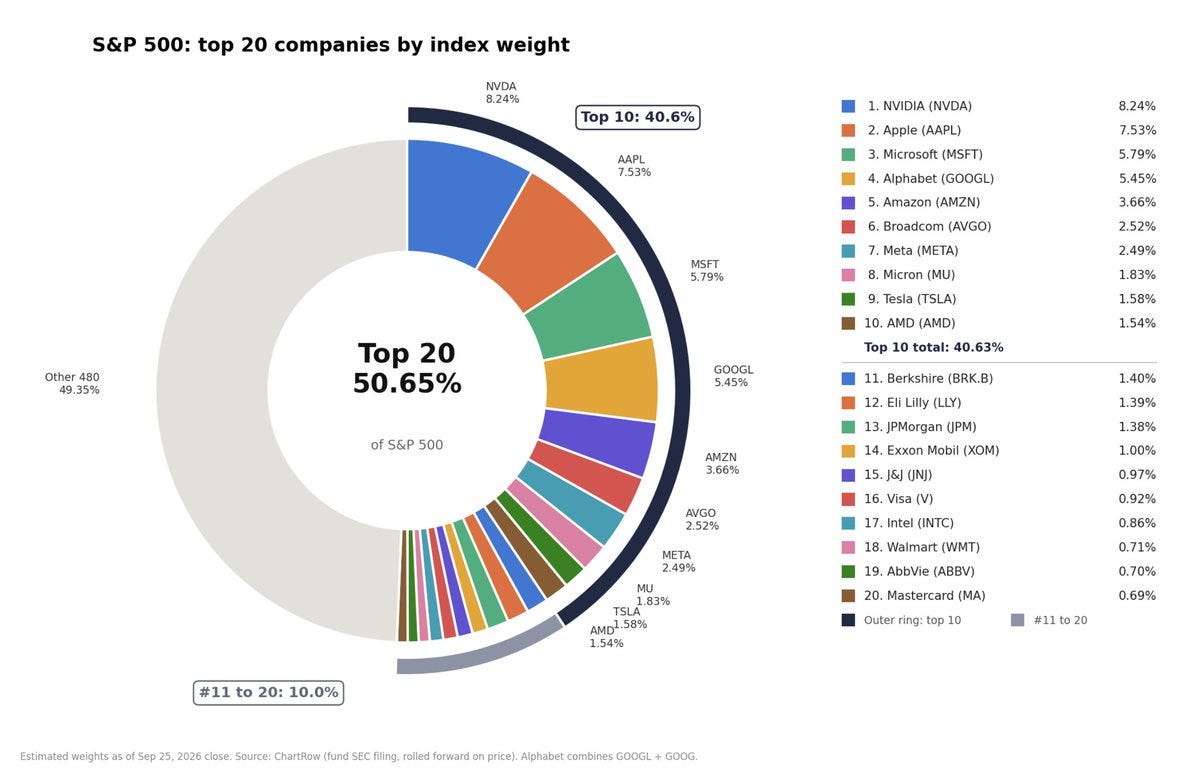
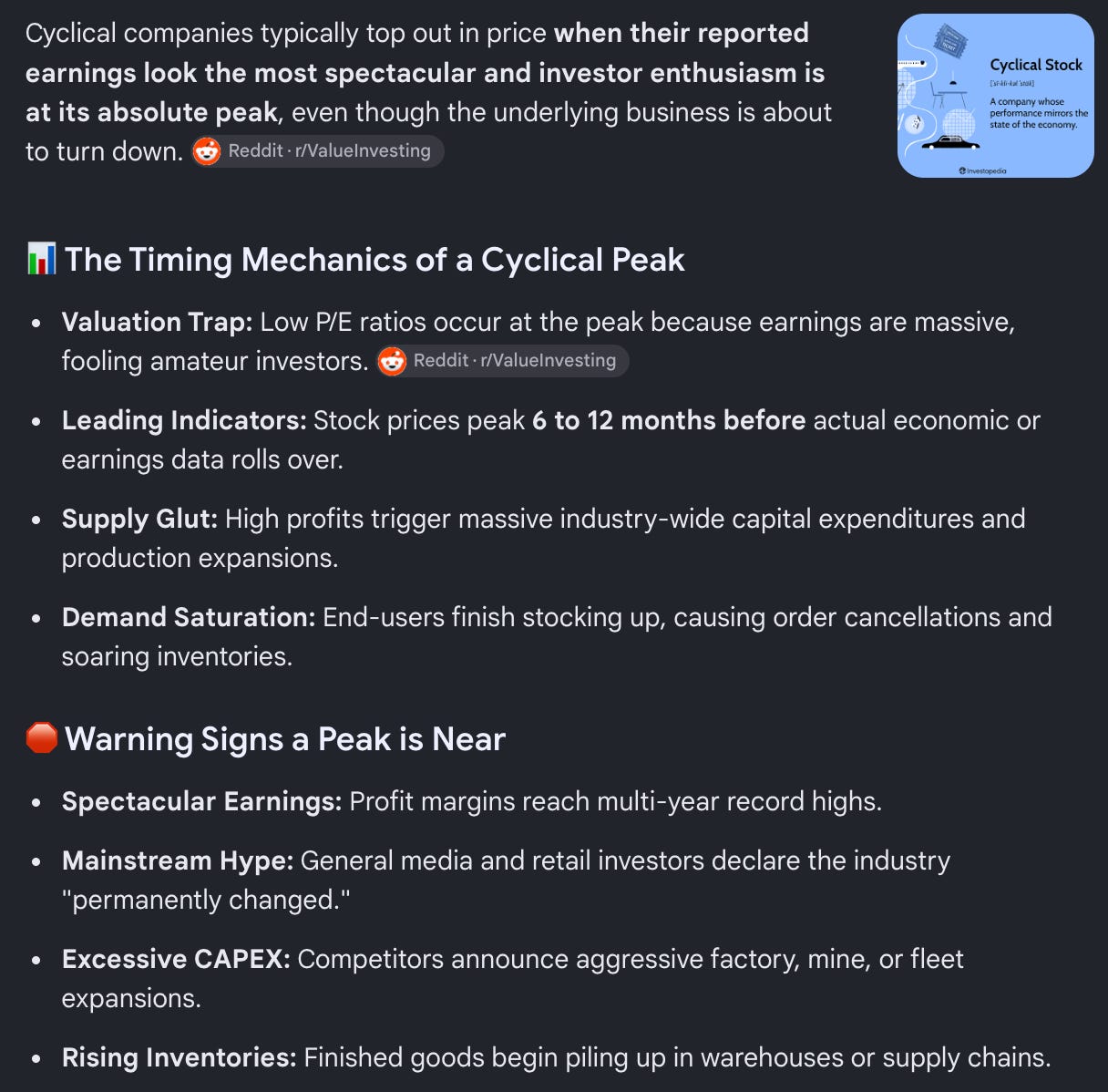
The top 10 companies are over 40% of the index. Even more concentrated than the dotcom bubble. 8.24% of the index is NVDA, a 5 trillion dollar company. The largest cyclical company we have ever seen. For anyone who doesn’t know when cyclical companies top:
Because of AI, a lot of the pain that is going on underneath the surface has been masked. At the time of writing this, most of the S&P500 is making new lows (376 companies) while we are barely off highs.
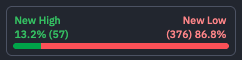
The entire market essentially is riding on an AI infrastructure trade that seems like it’s close to falling apart.
Similarities to 2008:
At the beginning of the year, my concern was not with the AI bubble, as I viewed the unrelated issues in the financial system and economy as much more of a concern. The reason I thought so was due to real estate, private credit, the consumer and the underlying leverage in the system.
Below is the link to the article showing what’s going on in real estate. Housing and CRE have been in a multi-year long correction and is just beginning to get severe.
The Real Estate Market is Running Out of Time

The real estate market is running out of time. And when I say real estate market, I mean the housing market and commercial real estate.
Auto Market Bubble
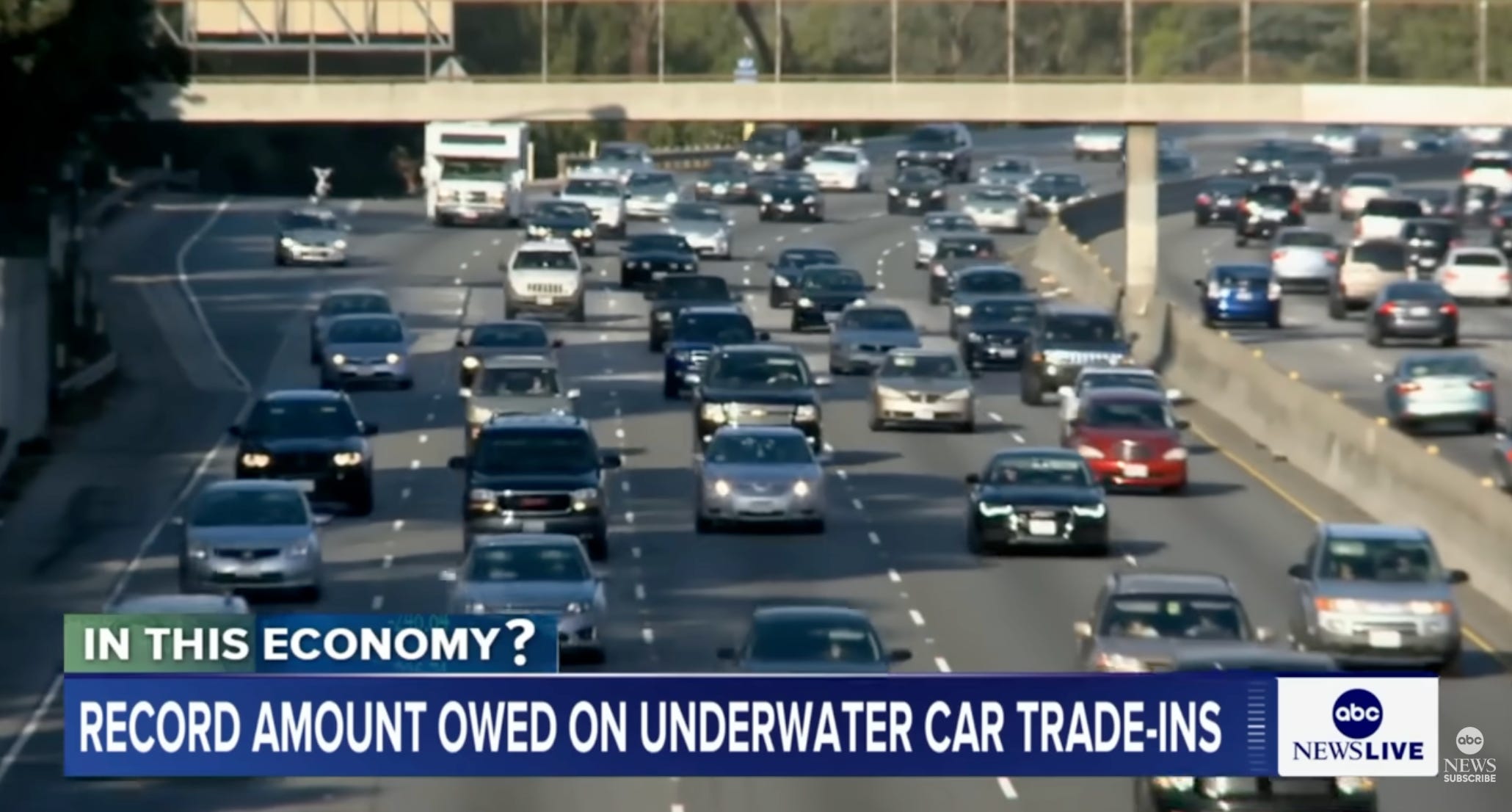
For those not aware or forgot, post covid we had prices for new and used vehicles skyrocket. There was a supply shortage which caused a squeeze in prices.
The availability of credit, combined with a surge of people wanting to live beyond their means, led to a large portion of the country splurging on expensive vehicles and paying above MSRP.
These are depreciating assets and once the market normalized, many were sitting massively underwater on their cars.
I like to do field research and whenever I am at businesses ask employees what they are seeing. Car dealerships are a great way to get a real-time pulse on the consumer.
I visited a few dealerships and every sales guy said the market has gotten extremely tough recently. But what was really telling was my conversation with the finance manager. My experience solidified my thesis and I had a moment very similar to this scene in The Big Short.

Here are some things I walked away with:
Definitely noticed things getting much worse recently.
People getting extended term length loans. Most are getting 84-month, and even 96-month auto loans. Some even getting 120-month (10-year) loans.
Cases of people in their 80s with maxed out credit cards coming in with credit under 600 and getting approved with high rates.
More and more young people coming in with terrible credit and maxed out cards
Anyone with good credit and a pulse gets approved. No income verification or debt-to-income check.
So banks are giving credit to anybody. Loosest it’s ever been. Instead of rejecting applicants that are at high risk of default, they extend the credit and give them 20+% interest rates.
Used car prices are at all time highs. People who already are struggling to pay their bills are able to buy cars and stack up a car payment that looks like a mortgage payment to the stack of bills.


Look at Carvana’s website. 99% approval rate!
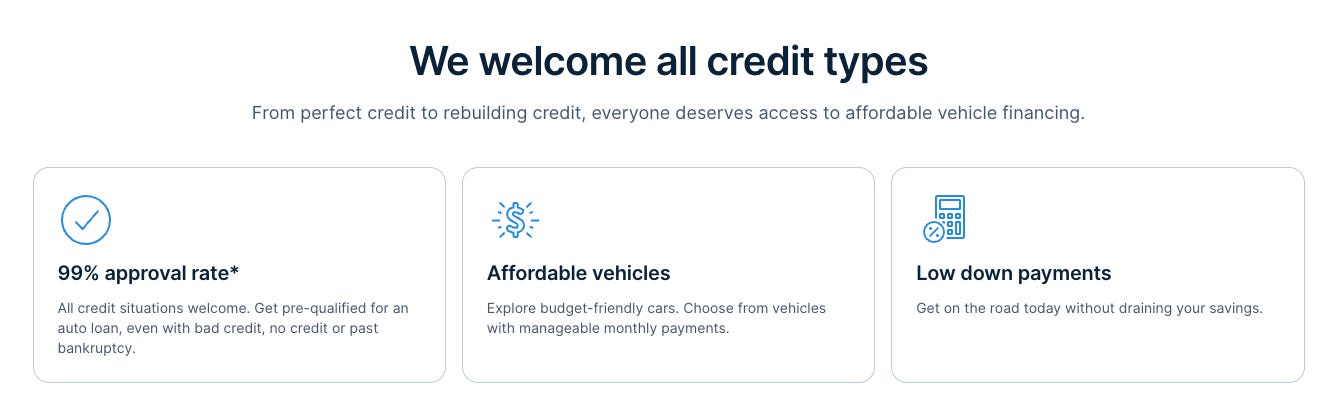
What was interesting is how easy it is for people with good credit to get approved. While on the surface it looks like no big deal, you can look back to what happened when used vehicle prices got squeezed.
A bunch of people with good credit ended up buying vehicles they could not afford. And in theory, they could have put whatever income they wanted to qualify for the beautiful vehicle of their choosing.
The Consumer:
You have probably heard “consumer is still spending, the economy is strong”. Many people do not understand how this is possible and I have a possible explanation.
The top end of the K has been fine, due to the stock market being at all time highs and the post covid real estate boom. Credit is the loosest it’s been since the GFC. The bottom of the K (majority of America) has been getting crushed by inflation and using credit to get by.
The personal saving rate was about 3% in July 2026, and credit card balances reached $1.26 trillion in Q2.
The New York Fed reported 4.8% of all household debt in some stage of delinquency at the end of Q1.
The narrative is due to misleading datapoints. Uber Eats drivers making less than minimum wage count in the unemployment rate. That doesn’t mean a low unemployment rate means everything is fine.
Anecdotal research is helpful for figuring out what’s actually going on. You can go on social media and find thousands of videos of people online venting about how they are barely getting by. It’s very apparent that the consumer is getting squeezed and close to the breaking point.
Private Credit
Private credit has become a massive industry since the great financial crisis. Why? Because of additional regulation put on banks for stricter lending standards.
In order to sidestep that regulation, private credit appeared to fill in the gap of risky lending.
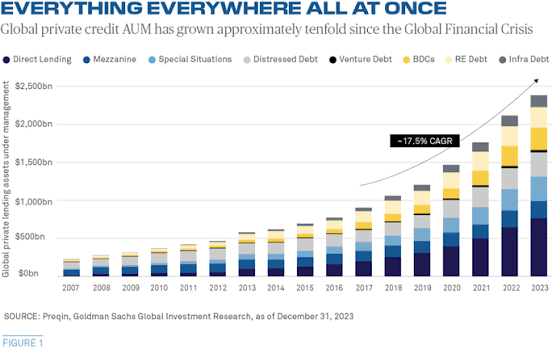
Private credit’s tagline is “equity like returns without the risk”. If you know the fundamental rules of finance, that does not make sense. In order to achieve higher returns, more risk must be taken.

It’s important to understand incentives. I am not going to make this part too long, but recommend looking into it yourself. You don’t even need to understand what’s going on to know it’s an issue. What you do need to understand is incentives.
Executives at PE/PC firms are incentivized to do as many deals as possible. They don’t personally bear the risk so they don’t need to be concerned about it. They focus on doing as many deals as possible to get the juicy bonus.
As private credit grew, more and more risk was taken. As more and more capital and competition comes into the space, good deals become harder to come by. It all works great until the system is stress-tested, which has started to occur and the cracks are showing. Fitch’s US private credit default rate hit a record 6.1% in July 2026 and has stayed at or above 6% every month since April.
There are 3 underlying crises inside of private credit: real estate, software, and now AI infrastructure.
The commercial real estate crisis has started to unfold as highlighted earlier. Software is another problem. Private credit lent to software companies that are now experiencing revenue decline and multiple compression due to AI. There are no buyers for these assets as well. To replace the real estate and software business that is drying up, the industry is turning to AI infrastructure.
Where this becomes a concern is the high probability of this being systemic. Many people think it’s only a private credit problem, but the problem isn’t limited to private credit.
After 2008, regulators pushed risky corporate lending out of banks. Banks simply started lending to the private credit funds that make those loans instead, through credit lines, loans against fund assets, and leverage on loan portfolios. Bank loans to non-depository financial institutions reached $1.4 trillion at the end of 2025, 5.6% of total bank assets, per the FDIC.
The second channel is less known and to me, more concerning. Over the last decade, private equity firms bought or partnered with life insurers. The model works like this:
1. The insurer sells annuities, mostly to people saving for retirement.
2. It invests the premiums in private credit, often originated by its affiliated asset manager, which earns fees on it.
3. It reinsures much of the business to an affiliate in Bermuda, where capital requirements are lighter and there is more opacity into the assets backing the liabilities.
The rabbit hole goes deep and I recommend doing your own research into this. There are some people out there doing great research on this subject. But on the surface it does look like it could be systemic if things go south.
Securitization of GPUs
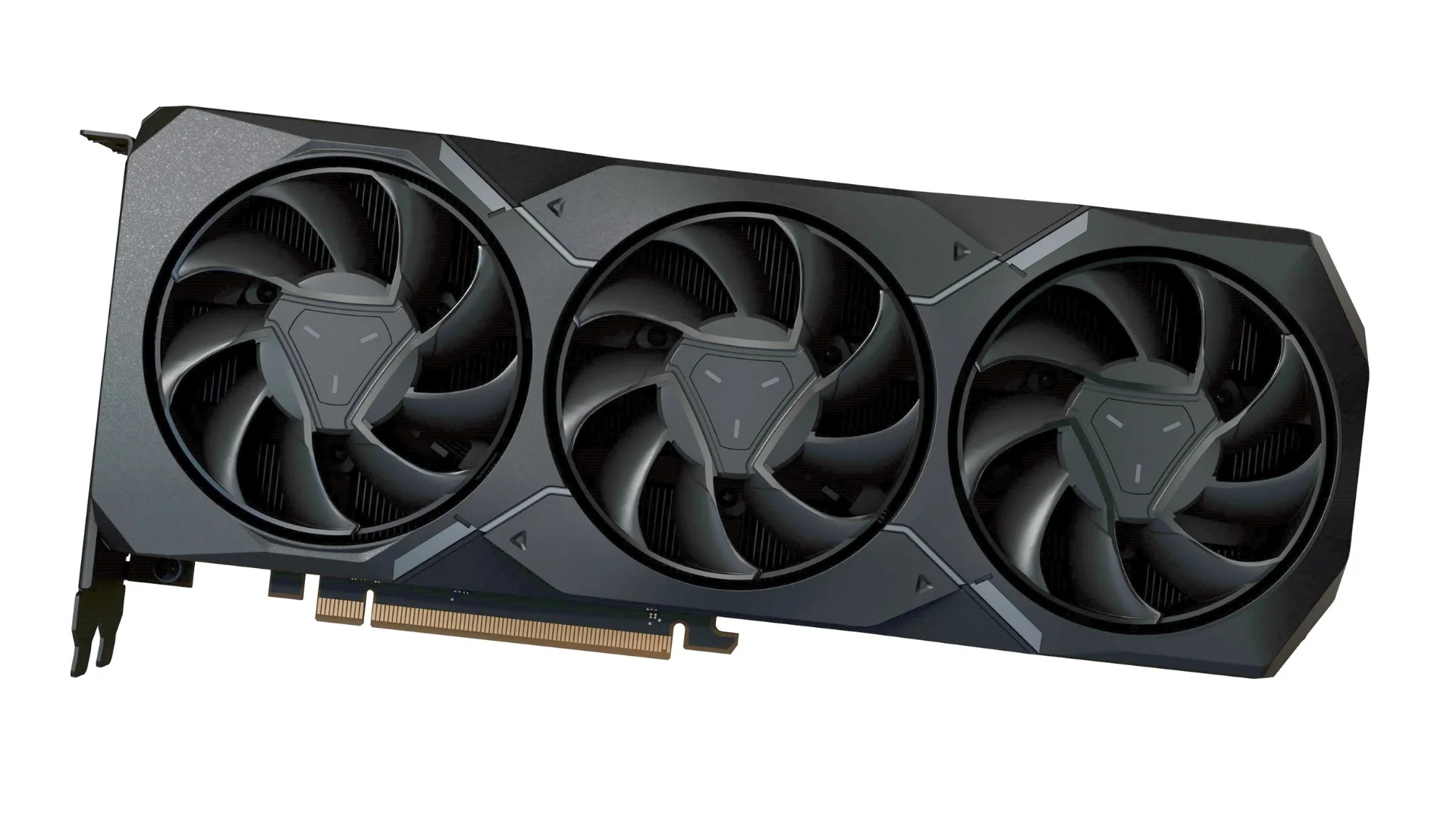
Remember mortgage backed securities? Those things that caused the great financial crisis? Well say hello to GPU backed securities.
Recently, NVDA assembled the avengers to get on CNBC and announce a “$500B financing deal”. Apollo, Blackrock, Blackstone, Brookfield, Goldman Sachs, and KKR gathered to talk about how compute is a new asset class.
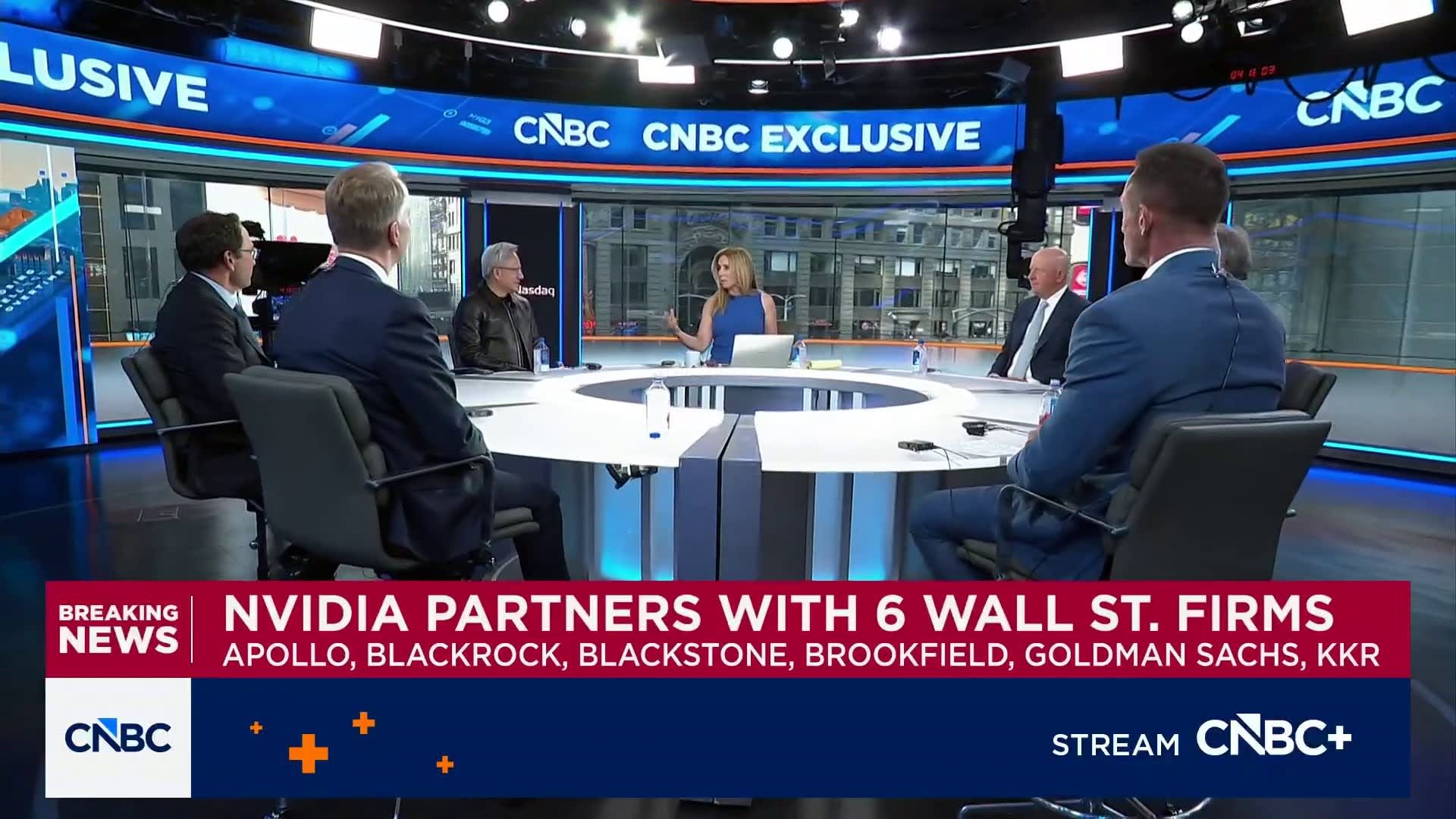
Understand the incentives from everyone in this picture. More lending on GPUs makes NVDA more money, and it makes every single one of these companies lending the money on fees. They want to securitize them, so they can sell them to pension funds so teachers and firefighters can hold all the risk of these loans.
I mean you can’t make this up. From the mouth of Larry Fink, CEO of Blackrock, he views this just like the beginning of the mortgage backed securities market.
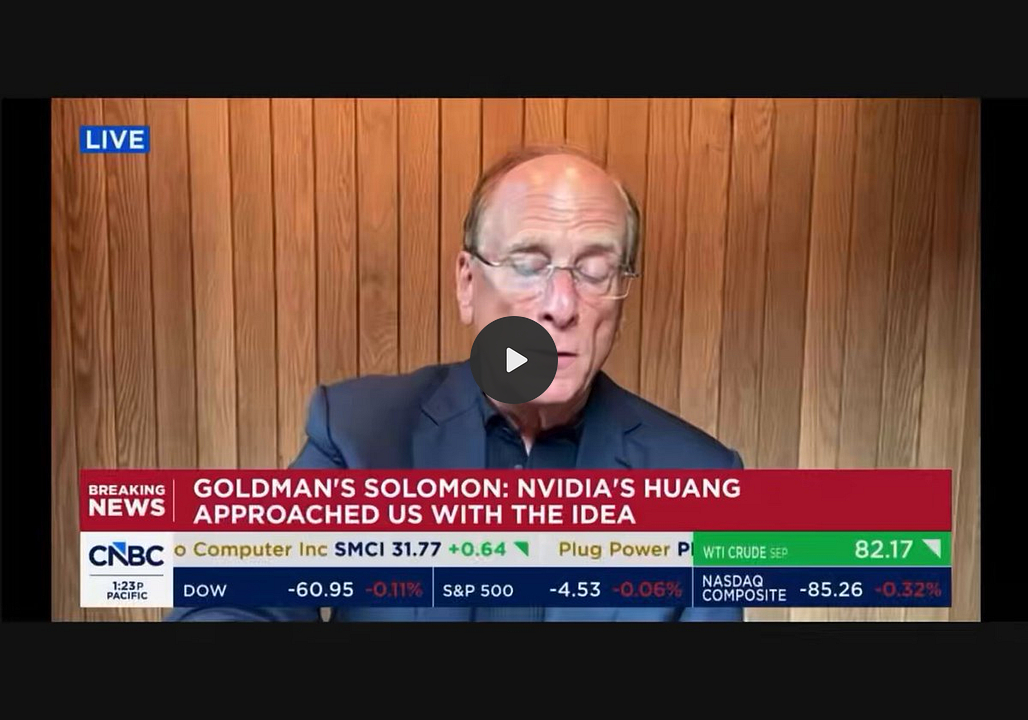
So private credit, which was already in trouble, wants to lend on this new asset class. This is where the dotcom and 2008 similarities blend together.
Mortgages were backed by houses that hold value for decades. GPUs are backed by chips that lose value every time Nvidia ships a new generation. If the loan outlasts the collateral’s economic life, the lender is exposed the moment new capital stops flowing.
Originators do not want to hold this risk. They want to sell it. The buyers are the same institutions that ended up holding mortgage risk in 2008: pensions, insurers, and now retail investors through private credit funds. US life insurers’ private credit exposure reached $807 billion, per Moody’s, after a $122 billion jump in 2025. Several of the largest private credit firms own insurance companies that invest in their own loans.
The AI risk has turned systemic. The entire system relies on one bet that is playing out differently than expected.
Energy
Historically, surges in energy prices like we have now have a high probability of a recession. It’s not hard to understand why that is the case.
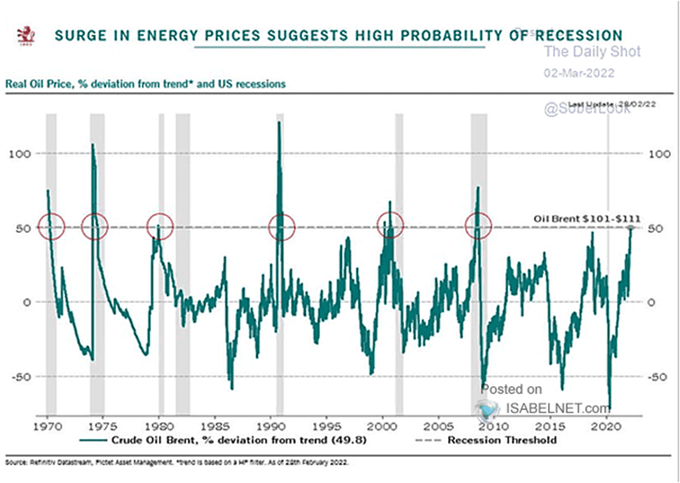
Energy spikes typically lead to recessions because there is some fragility built up in the system and energy spiking is the match that lights the flame.
The economy is currently the most fragile in history. Aside from the top 10%, the consumer is fighting for their life.
The price of diesel has been skyrocketing. Diesel is an input cost for just about everything.
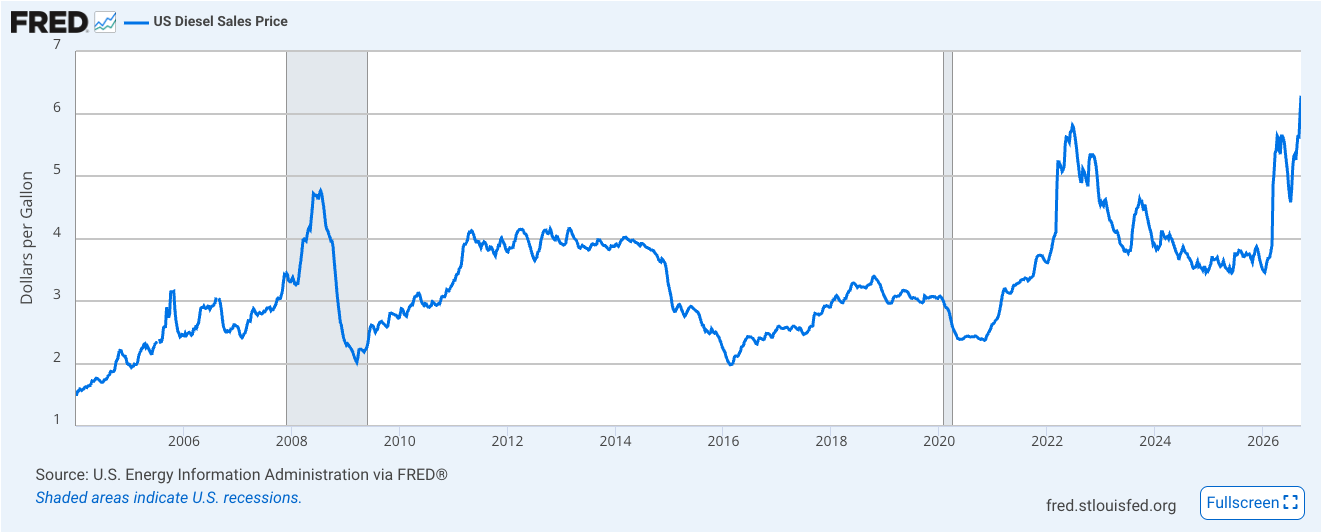
Now, there is going to be another wave of price increases when the consumer is already barely getting by.
Yields and Maturity Wall
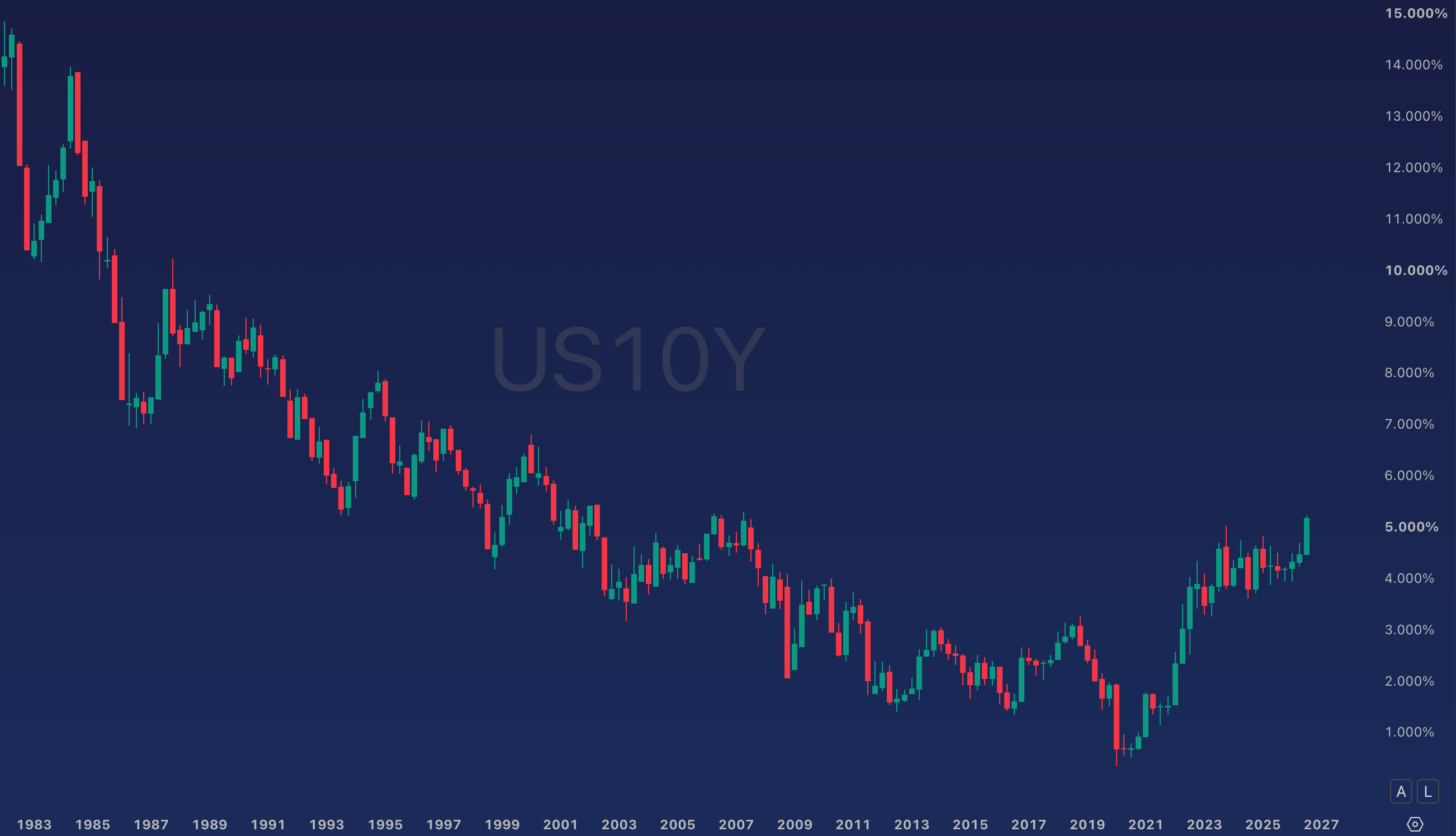
Entire industries were built on the assumption that rates would continue to fall. For the first time in decades, we are seeing what happens in a rising rate environment.
Companies are now having to refinance their debt and have their cost of debt be multiples higher.
Our economy has become over financialized throughout these decades. Higher yields have severe implications.
Use the AI buildout for example. This is the largest infrastructure buildout in history, now being funded by debt. To keep the party going, AI companies have to continue to raise debt at a higher and higher rate. It’s reflexive as well because as more debt is issued, the more competition for capital there is, driving rates higher.
What the Market is Already Telling Us
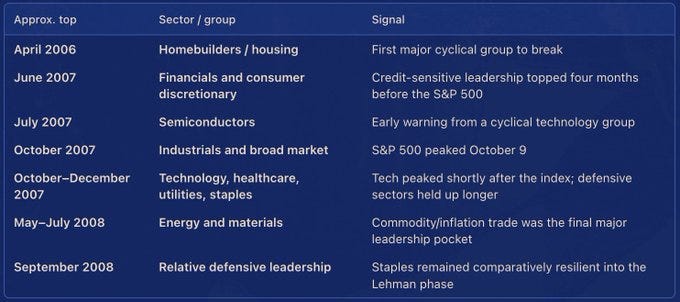
In this cycle:
-Homebuilders topped November 2024
-Consumer discretionary topped January 2026
-Semiconductors topped June 2026
-S&P500 topped August 2026
The patterns are eerily similar.
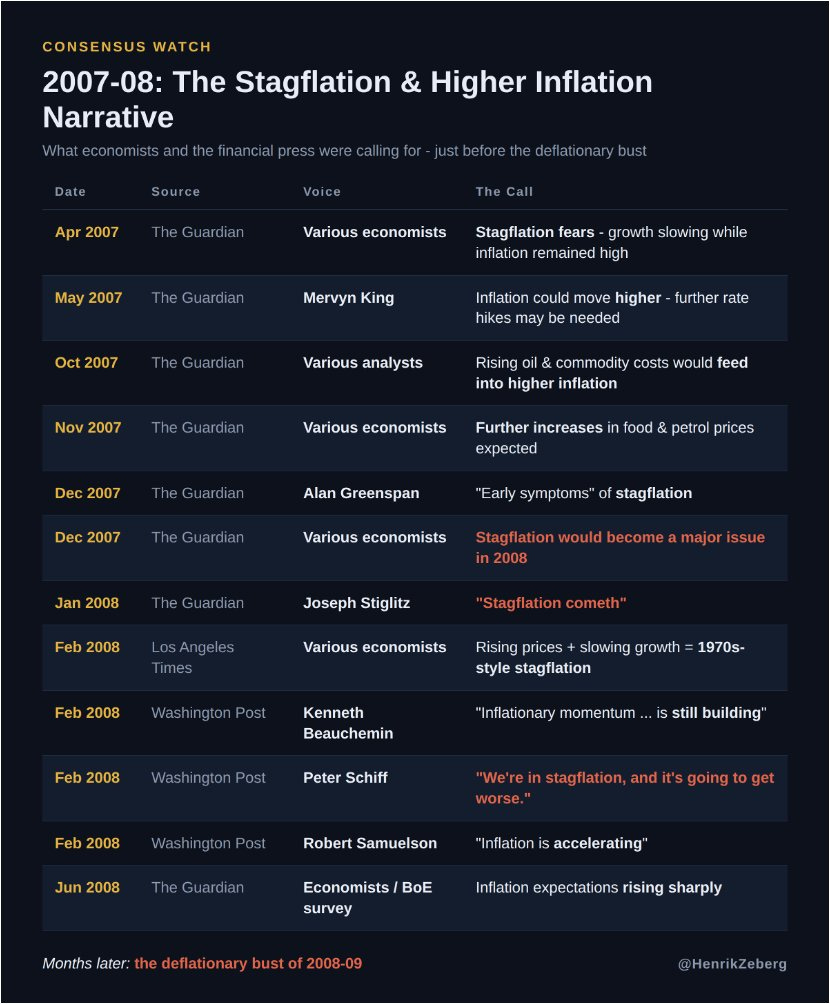
What people were discussing before the 2008 crisis is also eerily similar to now:
Leverage
In July I wrote an article titled “Did the Bubble just Pop?” This article highlighted how much leverage is in the system and the massive unwind in leverage we witnessed and how we saw a similar thing happen with crypto, then gold and silver, then most recently the AI trade.
We saw a fast, sharp unwind of the crowded AI infrastructure trade which led to effectively an entire country getting margin called (Korea), many hedge funds blowing up, and many retail investors getting margin called.
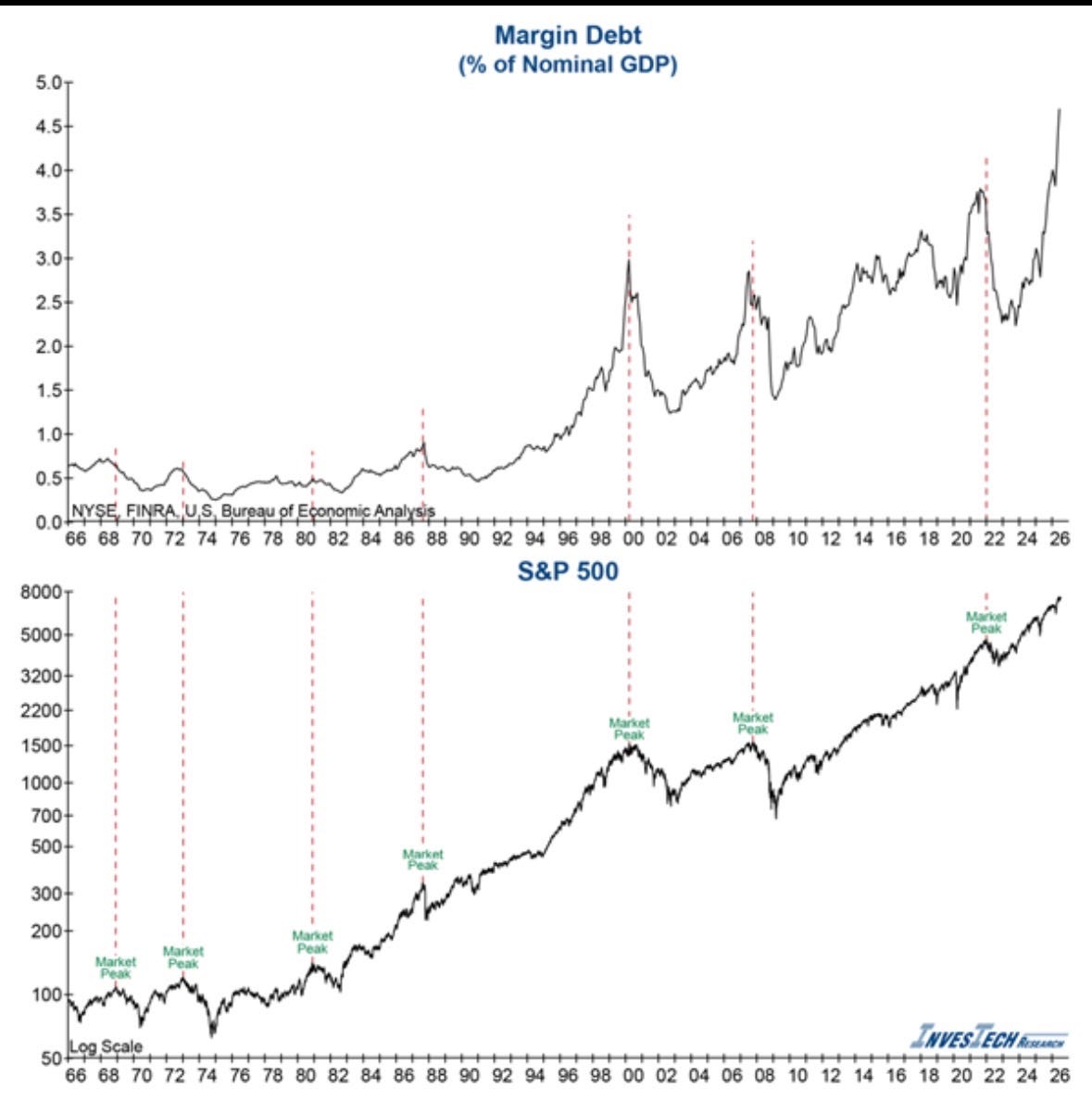
Margin debt is at all time highs. The concern with leverage is not just in the stock market though. The entire system is leveraged. With private credit and the extended leverage behind it. With auto loans, credit card debt, student loans, real estate.
The entire system is built on leverage, which is what is really concerning.
Conclusion:
If you slow down and zoom out, we’ve been living through a recession playing out. It has just been masked by throwing the AI buildout on top of it.
Credit is loosest before the credit cycle turns. To me it’s very clear it’s about to. When the credit cycle turns, that’s when it’s game over. The entire system is running on credit.
The extreme K shaped economy we are experiencing is largely because asset prices have continued to rise while inflation has crushed the bottom. Elevated asset prices causes the wealth effect where people spend because they feel rich.
Now the real estate market is falling. If the stock market were to fall, there would be a reverse wealth effect and the top of the K would pull back spending, causing the downturn to be more severe.
In my opinion, it is unavoidable that we see a situation similar to 2008. The government will likely do what they have done since the last financial crisis and print money and bail out the actors who gambled with others livelihoods.
What is unique this time is that the government already has so much debt and the K-shaped economy is already so stretched that it is in a tough position to react how they did in the great financial crisis.
Add into the mix, that AI will continue to accelerate and companies will be forced to become leaner and more efficient as many already have.
My hypothetical situation here is that the government prints their way out of this, and UBI (universal basic income) will be ushered in to support the majority of people outside the top 10%. The top will likely face higher taxes to pay for it.
I believe we will see the biggest structural shift in our lifetimes. It’s clear to me where this is going, but not yet how it resolves.
Would love to hear others’ takes on this and where we are headed.
Contact:
If you are an accredited investor and interested in investing in Avian Capital, please reach out at matt@aviancap.com or fill out the contact form on aviancap.com.
Disclaimers:
This article is for informational and educational purposes only and reflects the personal opinions of the author as of the date of publication. It is not investment, legal, tax, or accounting advice, and it is not a recommendation to buy, sell, or hold any security or to adopt any investment strategy.
Nothing in this article is an offer to sell or a solicitation of an offer to buy any interest in Avian Capital or any other fund. Any such offer will be made only to verified accredited investors through confidential offering documents, which contain important information about risks, fees, and conflicts of interest. Investing in a private fund involves significant risk, including the possible loss of your entire investment, and interests are illiquid and subject to transfer restrictions.
This article contains forward-looking statements, opinions, and projections that are inherently uncertain. Actual events and results may differ materially. The author’s views may change at any time without notice, and the author has no obligation to update this article.
Information in this article comes from third-party sources believed to be reliable, including news reports, company disclosures, and industry data, but it has not been independently verified, and no representation is made as to its accuracy or completeness. References to specific companies are for illustration only.
Avian Capital, its affiliates, and the author may hold long or short positions, including options, in securities of companies discussed in this article, and may trade these positions at any time without notice.